Toroidal Propeller vs. 3-Blade

Bench comparison of toroidal and conventional 3-blade props for thrust, efficiency (thrust/W), and acoustics (dBA). Sensorized stand with load cell, power/RPM sensing, and SPL readings; post-processed in MATLAB.

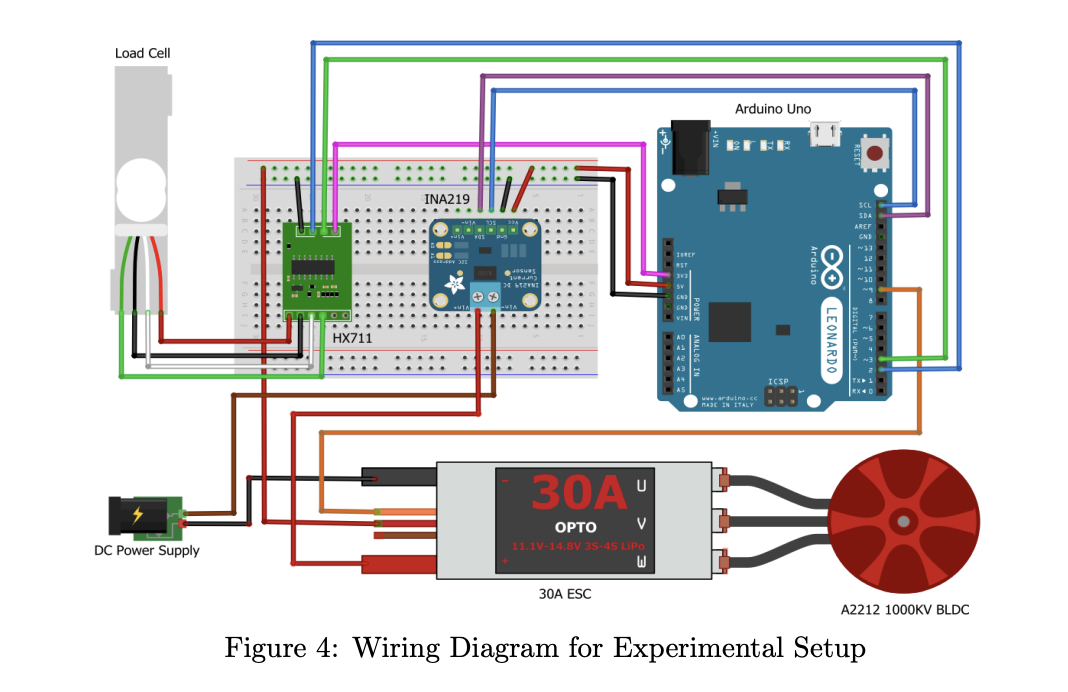
Load Cell (1 kg) + HX711 INA219 (V/I/Power) Laser Tachometer SPL (dBA) MATLAB
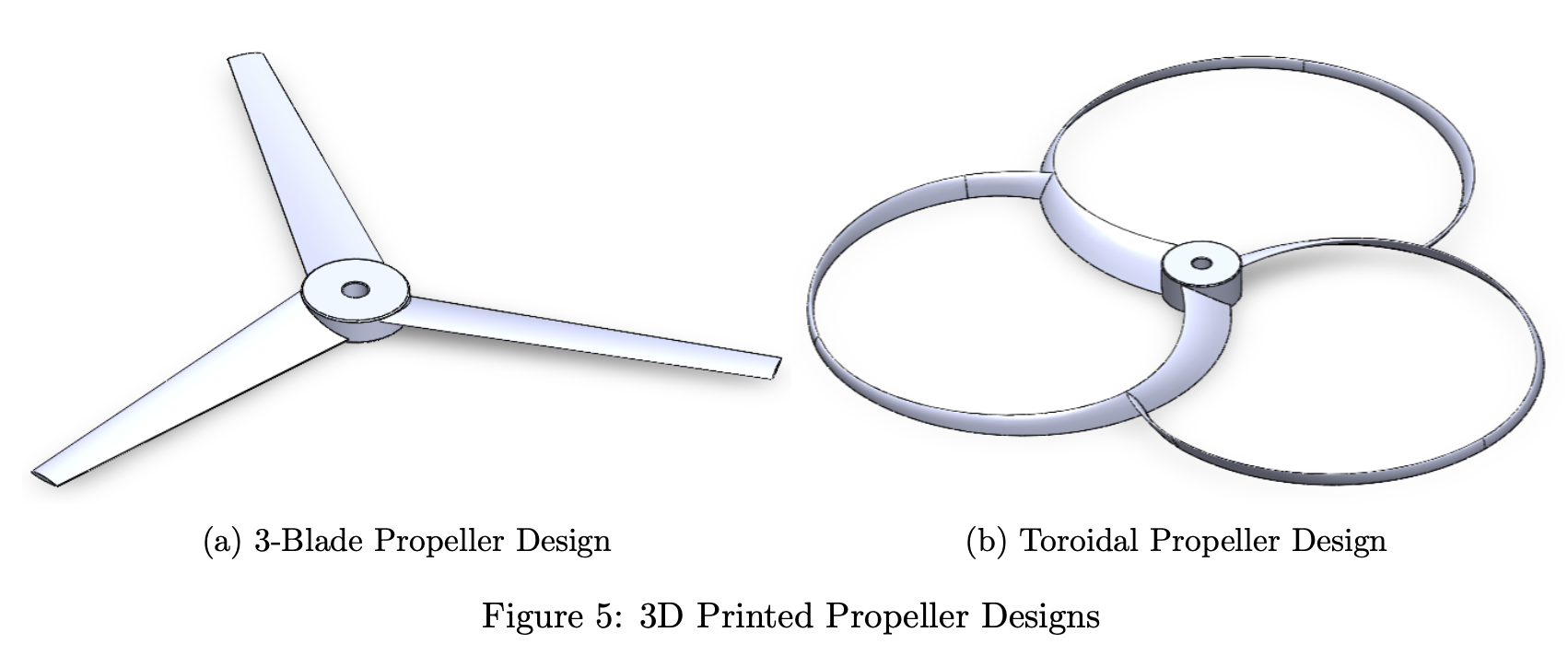
Propeller comparison (toroidal vs 3-blade)
Toroidal propeller test setup
Load cell and instrumentation
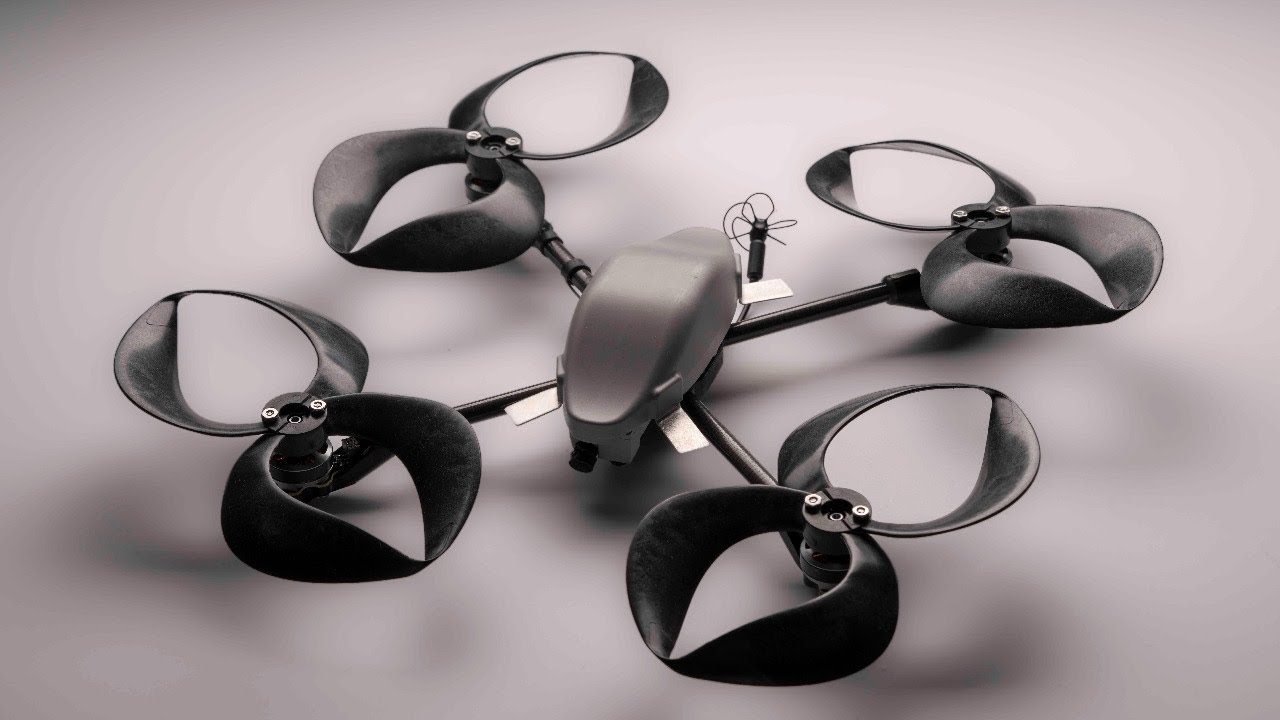
Toroidal propeller close-up

Problem

Can a toroidal prop reduce perceived noise while maintaining or improving efficiency vs a standard 3-blade?

Approach

Sensorized thrust stand: thrust (load cell), V/I/Power (INA219), RPM (laser tach), SPL (dBA). MATLAB post-processing.

Result

Toroidal shows better efficiency and lower noise at low RPM, but trends reverse at higher RPM (efficiency falls, SPL rises).

Methods (Rig & Sensors)

Load Cell Calibration

Linear fit between known masses and readings: y = 0.98854·x − 0.019826 ± 1.0385 g (95% interval). Calibration was done with 10–82 g references and validated over 10 trials.

Interpretation: scale is near 1:1 with small offset and ~±1.04 g prediction interval across the span.

Representative Results

3-Blade: RPM Noise (dB) Toroidal: RPM Noise (dB)
1855 66 1115 65.5
2636 71.5 1500 68.3
3288 72.5 1805 77.0
3779 78.3 2087 74.7

Trend summary: toroidal is most competitive at lower RPM bands (higher thrust/W and lower dBA). As RPM climbs, the toroidal’s more aggressive ramp angle increases acoustic disruption and reduces efficiency; the standard 3-blade overtakes it at higher thrust/RPM.

Notes: values reflect one test rig and specific prints; results vary with prop size, pitch, motor, and stand geometry.

Theory (Brief)

Blade-element theory integrates sectional lift along the radius to estimate thrust; with our stationary setup (V≈0), angle of attack aligns with blade pitch. Toroidal geometry effectively eliminates a discrete wingtip, redistributing vortices and potentially lowering induced drag and perceived noise at low RPM. Model trends captured thrust ∝ n² but absolute magnitudes deviated from experiment due to chord/angle distribution and stationary test assumptions.

Back to projects Contact me

More Projects